

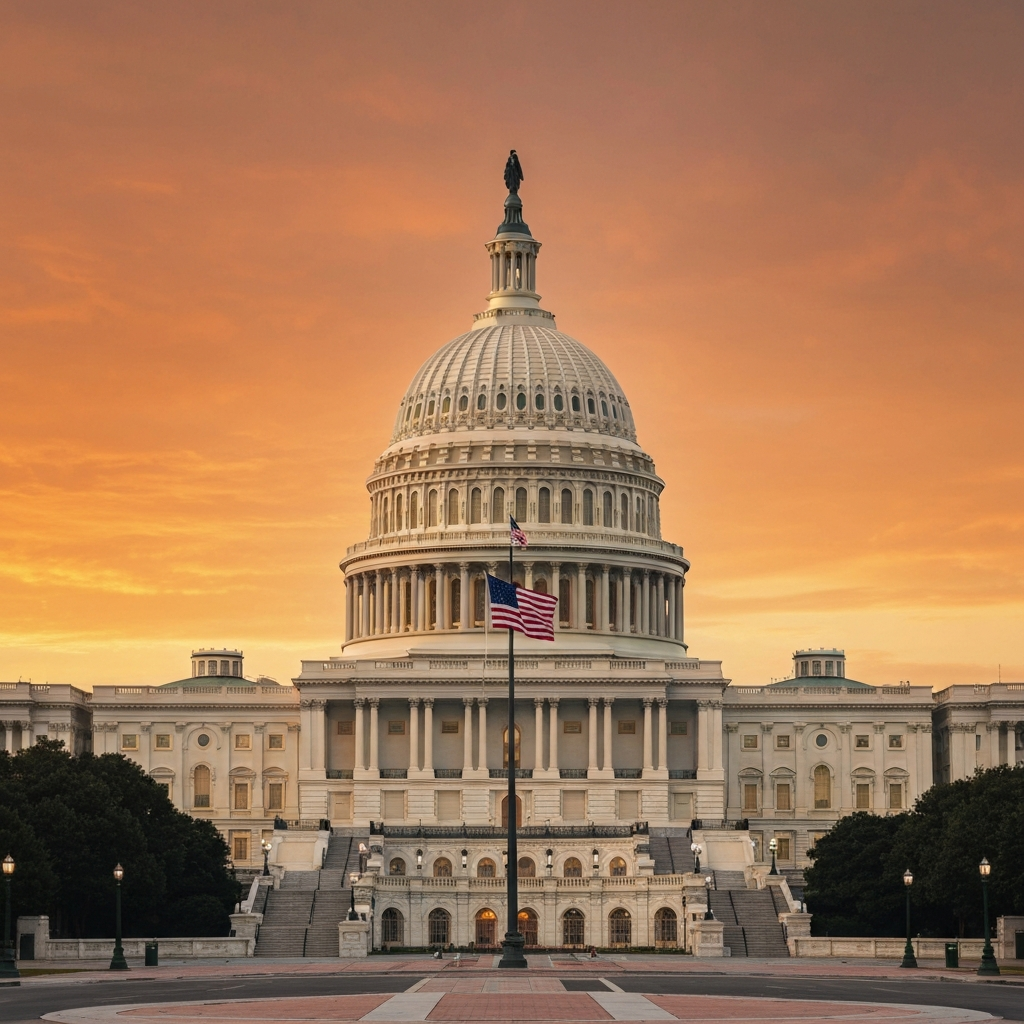
The United States operates under a federal constitutional democracy, dividing authority between the national government and individual state governments. This structure ensures a balance of power and prevents any single entity from becoming too dominant.
Three Branches of Government
The U.S. federal government is composed of three distinct branches:
Legislative Branch
Known as Congress, this branch is responsible for creating laws. It consists of two chambers:
- House of Representatives: Members are elected based on the population of each state, with larger states having more representatives.
- Senate: Each state, regardless of size, elects two senators, ensuring equal representation.
Congress also holds the power to confirm or reject presidential nominations and to declare war.
Executive Branch
Headed by the President, this branch enforces laws and oversees the federal administration. The President serves as the Commander-in-Chief of the armed forces and has the authority to sign or veto legislation passed by Congress. The Executive Branch also includes the Vice President and the Cabinet, which comprises heads of federal agencies.
Judicial Branch
This branch interprets laws and ensures they align with the Constitution. The Supreme Court, the highest court in the land, leads this branch. Justices are nominated by the President and confirmed by the Senate, serving lifetime appointments to maintain judicial independence.
Checks and Balances
The U.S. Constitution establishes a system of checks and balances to prevent any one branch from gaining excessive power. For example, while Congress makes laws, the President can veto them; however, Congress can override a veto with a two-thirds majority. The Supreme Court can declare laws or executive actions unconstitutional, providing a judicial check on the other branches.
Federalism
In addition to the federal government, each of the 50 states has its own government, with powers reserved by the Constitution. This system, known as federalism, allows states to address local issues while the federal government handles national concerns. State governments have their own constitutions, legislatures, and courts, mirroring the federal structure.
Political Parties
The U.S. primarily operates under a two-party system:
- Democratic Party: Generally advocates for progressive policies and a more active role of government in social programs.
- Republican Party: Typically supports conservative policies, emphasizing limited government intervention and free-market principles.
While third parties exist, they have historically played a minor role in national politics.
Electoral System
Presidential elections occur every four years. Instead of a direct popular vote, the U.S. uses the Electoral College system. Each state has a number of electoral votes equal to its total number of Senators and Representatives. Most states award all their electoral votes to the candidate who wins the popular vote in that state. A candidate needs a majority of the 538 electoral votes to win the presidency.
Understanding the U.S. political system provides valuable insights into its governance and the principles that guide its democracy. For Japanese readers, recognizing these structures can enhance comprehension of U.S. policies and their global implications.