

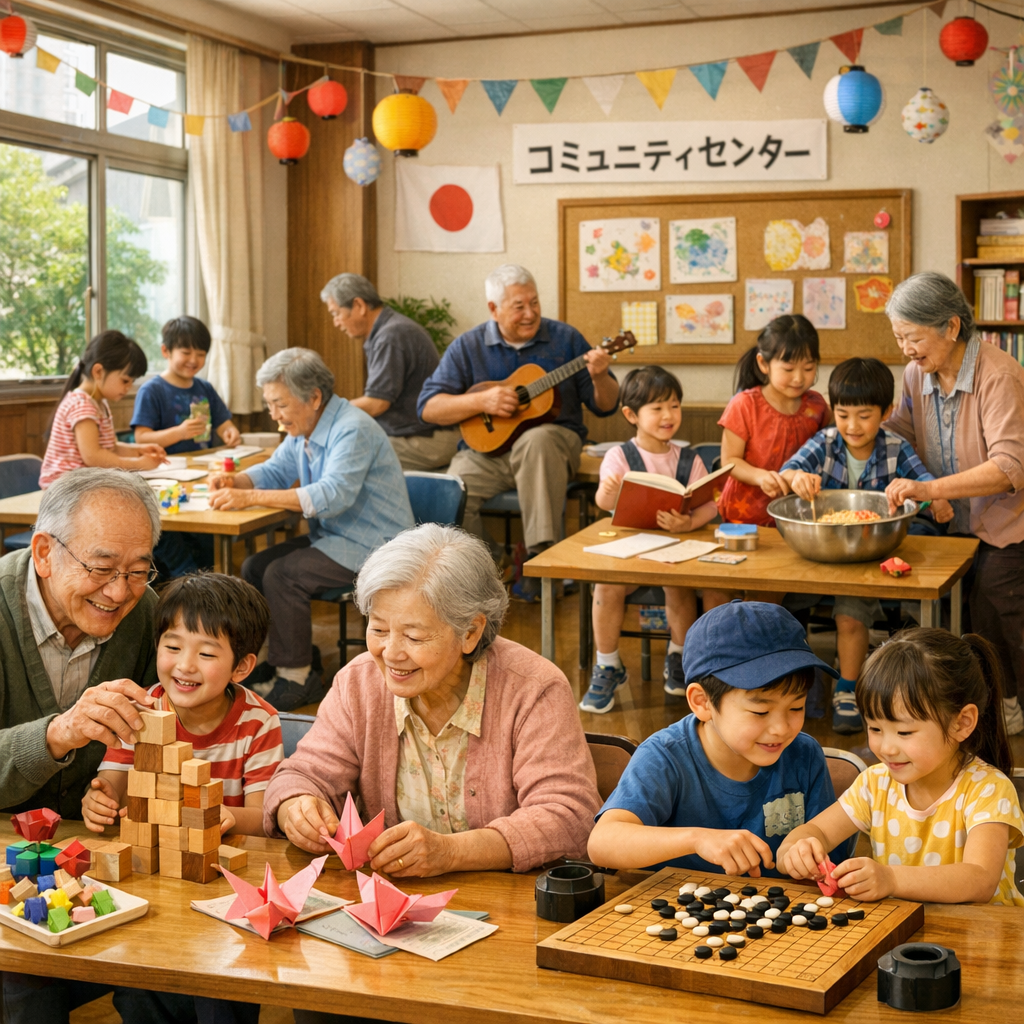
In Tokyo, a city renowned for its rapid pace and technological advancements, fostering connections between generations has become a focal point for community development. Various initiatives are actively working to bridge the gap between the young and the elderly, creating a more cohesive and supportive society.
Innovative Community Spaces
One notable example is the Fukagawa Enmichi facility in Koto City. This multi-generational welfare center integrates day care services for both children and the elderly, alongside a play area for infants and toddlers. Central to its design is the ‘Enmichi’ walkway, promoting free movement and interaction among all users, thereby nurturing natural intergenerational connections.
Collaborative Community Events
Events like the ‘San-iku Festival’ organized by Tokyo Seifu-en in Sumida Ward exemplify efforts to strengthen community ties. By involving local residents, businesses, and schools, these festivals foster friendships and mutual understanding across age groups.
Volunteerism and Social Participation
Organizations such as the Shisei Senior Service Center in Tachikawa City encourage volunteer activities that involve both seniors and younger community members. With around 900 volunteers annually, the center promotes mutual support and shared experiences, enhancing community cohesion.
Digital Platforms for Engagement
Digital platforms like GBER (Gathering Brisk Elderly in the Region) offer flexible opportunities for social participation, accommodating diverse lifestyles and schedules. By providing information on local activities and resources, GBER supports self-directed community involvement, allowing individuals to contribute their strengths to address local challenges.
Conclusion
These initiatives highlight Tokyo’s commitment to fostering intergenerational bonds. By creating spaces and opportunities for interaction, the city is building a more inclusive and supportive community where individuals of all ages can thrive together.