

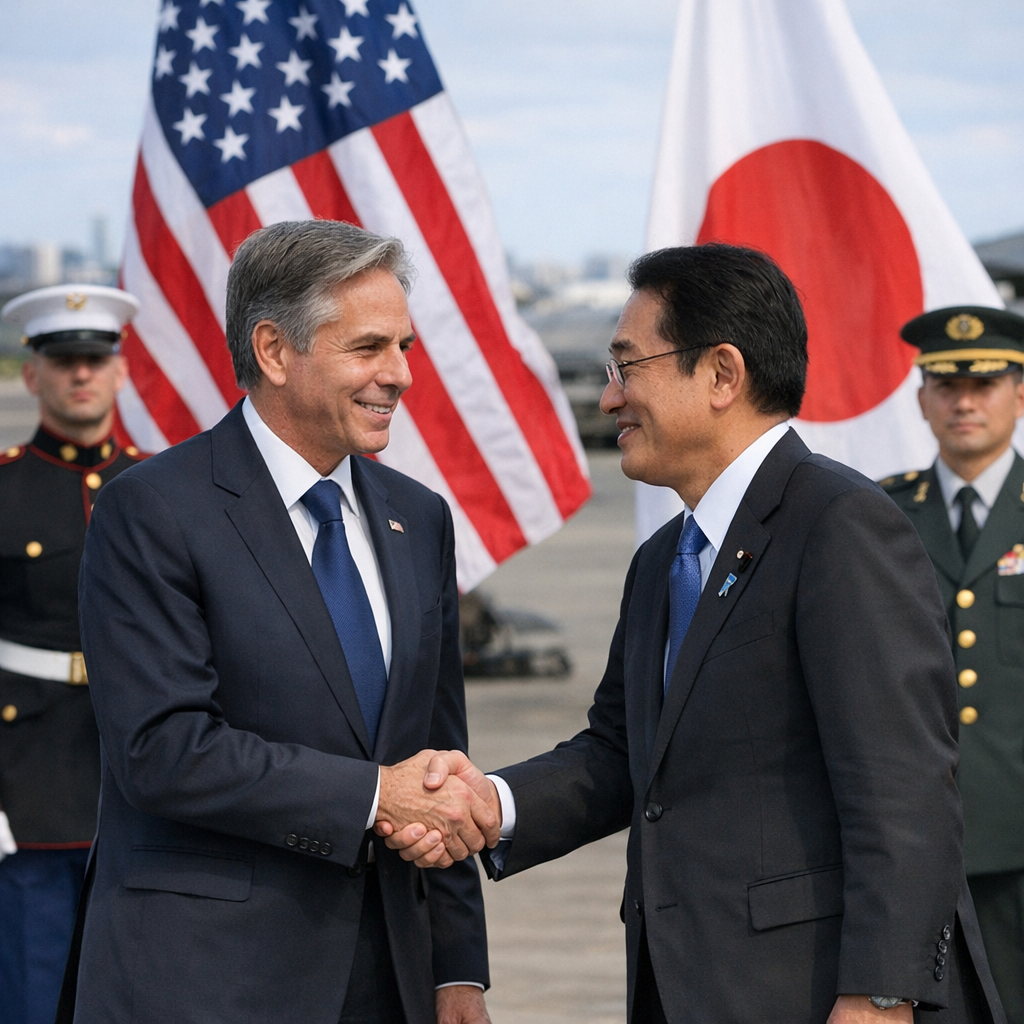
The United States and Japan have long maintained a robust alliance, characterized by strong economic ties and a shared commitment to regional security. This partnership has evolved over the years, adapting to new challenges and opportunities.
Economic Collaboration
Trade between the U.S. and Japan remains a cornerstone of their relationship. In 2025, bilateral trade in goods and services reached $328.2 billion, with the U.S. exporting $136.8 billion to Japan and importing $191.4 billion from Japan. Key U.S. exports include liquefied natural gas, pharmaceutical products, and agricultural goods, while imports from Japan are dominated by automobiles, auto parts, and electronics.
In July 2025, the two nations signed a landmark economic agreement aimed at enhancing market access and investment opportunities. This agreement included Japan’s commitment to purchase $8 billion in U.S. agricultural products and to increase imports of American rice by 75%. Additionally, Japan agreed to lift longstanding restrictions on U.S. automobiles, granting American automakers greater access to the Japanese market.
Security Partnership
The security alliance between the U.S. and Japan is anchored in the Treaty of Mutual Cooperation and Security, first signed in 1951 and revised in 1960. This treaty allows for the presence of U.S. military bases in Japan and commits both nations to mutual defense in the event of an attack. The alliance has been instrumental in maintaining peace and stability in the Asia-Pacific region.
Recent developments have further solidified this partnership. In September 2025, the U.S. and Japan implemented a framework agreement that enhances defense cooperation and interoperability between their armed forces. This includes joint military exercises and shared defense technology initiatives aimed at addressing emerging security challenges.
Looking Ahead
As global dynamics continue to shift, the U.S.-Japan alliance remains a pivotal element in promoting economic prosperity and regional security. Both nations are committed to deepening their collaboration, ensuring that their partnership adapts to meet the demands of the 21st century.