

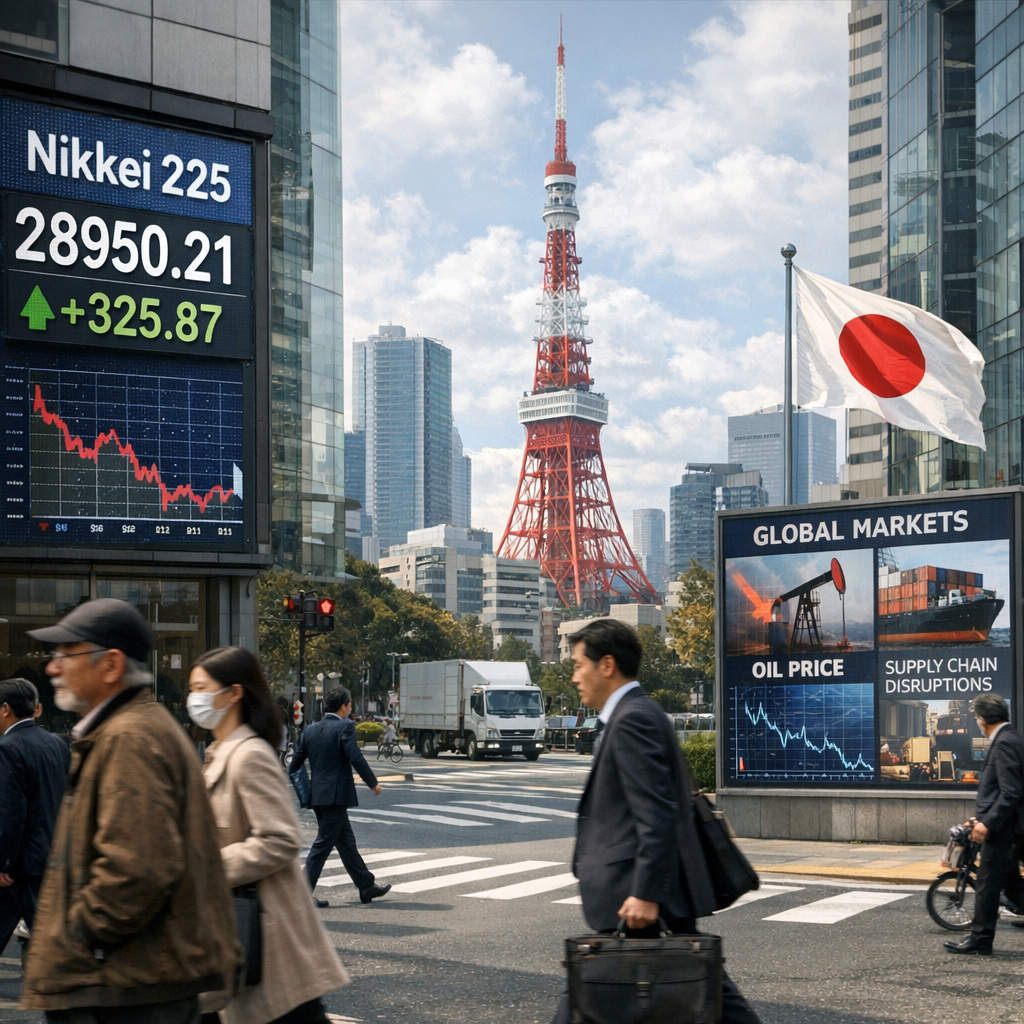
Japan’s economy is currently facing a series of global challenges that test its resilience and adaptability. From trade tensions to energy crises, the nation is navigating complex international dynamics to maintain economic stability.
Trade Tensions and Economic Impact
Recent trade disputes, particularly with major partners like the United States, have introduced uncertainties for Japanese exporters. The imposition of tariffs on key exports, including automobiles, has led to a decline in trade volumes. For instance, in May 2025, Japanese goods exports to the U.S. fell by 11.1% compared to the previous year, with motor vehicle exports dropping by 24.7% during the same period. This downturn underscores the vulnerability of Japan’s export-driven economy to global trade policies.
Energy Security Concerns
Energy security remains a pressing issue for Japan, especially in light of recent disruptions in the Strait of Hormuz—a critical passage for oil shipments. Such disruptions threaten the stability of Japan’s energy imports, given that the Middle East accounted for 93.5% of the country’s crude oil imports in 2025. The government has responded by releasing oil reserves to mitigate potential shortages, highlighting the importance of diversifying energy sources and enhancing domestic energy resilience.
Demographic Challenges and Economic Growth
Domestically, Japan continues to grapple with demographic challenges, notably an aging population and a declining birthrate. These factors contribute to labor shortages and increased social welfare costs, posing long-term risks to economic growth. In 2023, the fertility rate declined to a record low of 1.2, emphasizing the need for policies that address workforce sustainability and economic vitality.
Strategic Adaptation and Future Outlook
In response to these multifaceted challenges, Japan is focusing on strategic adaptation. Efforts include negotiating trade agreements to mitigate the impact of tariffs, investing in renewable energy to reduce dependence on imported fuels, and implementing policies aimed at boosting birthrates and integrating technology to offset labor shortages. These initiatives reflect Japan’s commitment to maintaining economic stability and growth amid a rapidly changing global landscape.