

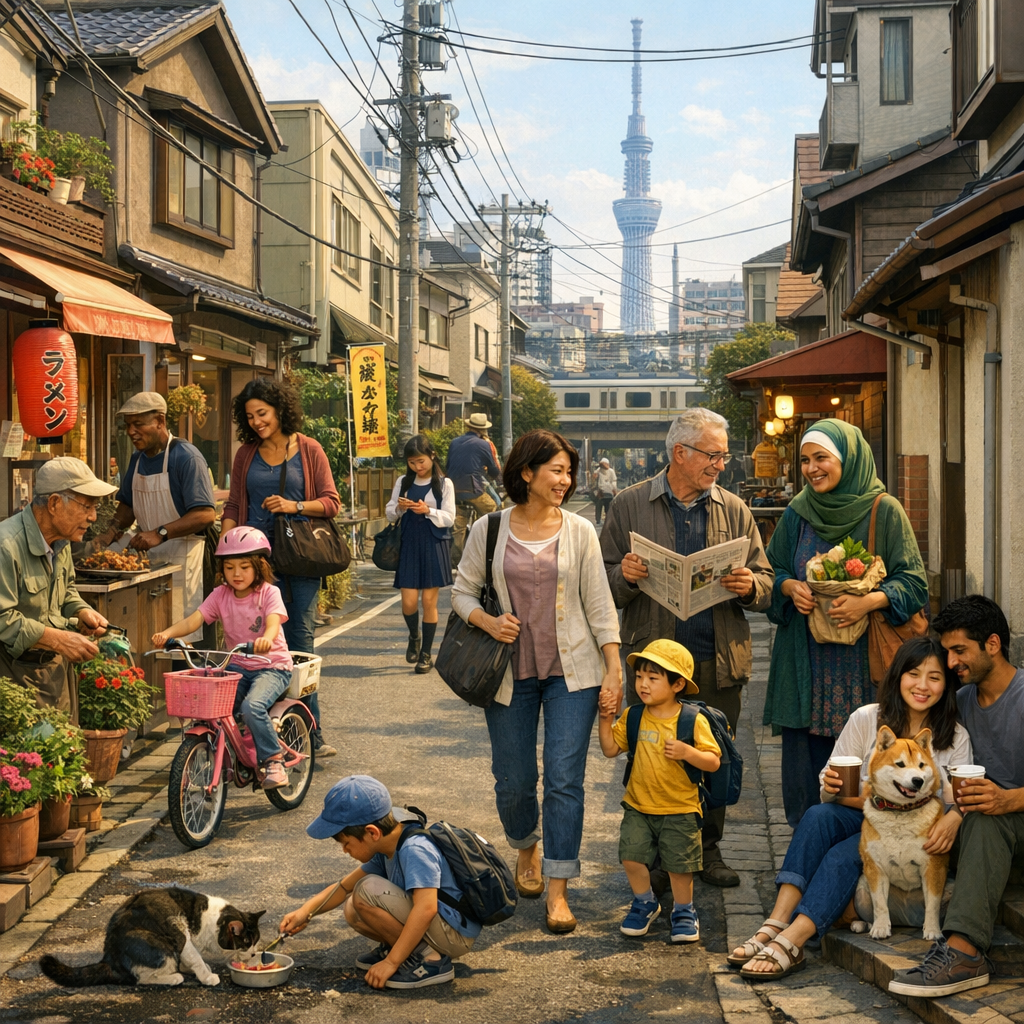
Tokyo, a city renowned for its dynamic urban landscape, is currently navigating a series of community challenges that reflect its evolving demographic and infrastructural realities. Key among these are the aging population, housing concerns, and the integration of diverse communities.
Aging Population and Suburban Renewal
The suburban areas of Tokyo are experiencing significant demographic shifts, characterized by an increasing number of elderly residents and deteriorating housing stock. This phenomenon, often referred to as ‘urban aging,’ poses challenges to community vitality and infrastructure maintenance. Addressing these issues requires thoughtful urban redevelopment policies that balance modernization with the preservation of community ties.
Housing and Community Integration
In districts like Oji in Kita Ward, the operation of ‘minpaku’ (short-term rental) businesses within residential neighborhoods has led to tensions between residents and operators. Concerns over noise, security, and the transient nature of guests have prompted calls for clearer regulations to harmonize the interests of all parties involved.
Similarly, areas such as Shin-Ōkubo have become vibrant ethnic enclaves, attracting a diverse population. While this diversity enriches the cultural fabric of the city, it also brings challenges related to community integration, including issues of noise and waste management. Effective communication and mutual respect are essential in fostering harmonious coexistence.
Technological Advancements and Community Impact
The rapid expansion of data centers across Tokyo underscores the city’s commitment to technological advancement. However, the proximity of these facilities to residential areas has raised concerns about noise pollution and environmental impact. Residents in districts like Koto Ward’s Shiohama have expressed apprehension over the continuous operation of cooling equipment and increased energy consumption. Balancing technological progress with community well-being necessitates comprehensive planning and open dialogue between stakeholders.
Initiatives for Inclusive Urban Development
In response to these multifaceted challenges, the Tokyo Metropolitan Government has launched initiatives such as the ‘Smart Tokyo Promotion Project for Solving Local Issues.’ This project aims to leverage digital technologies to address community-specific problems, enhancing the quality of life for residents. By integrating smart solutions into urban planning, Tokyo seeks to create a more inclusive and resilient city.
As Tokyo continues to evolve, addressing these community challenges requires a collaborative approach that respects the needs of all residents. Through thoughtful policy-making and community engagement, the city can navigate these complexities and foster a more harmonious urban environment.