

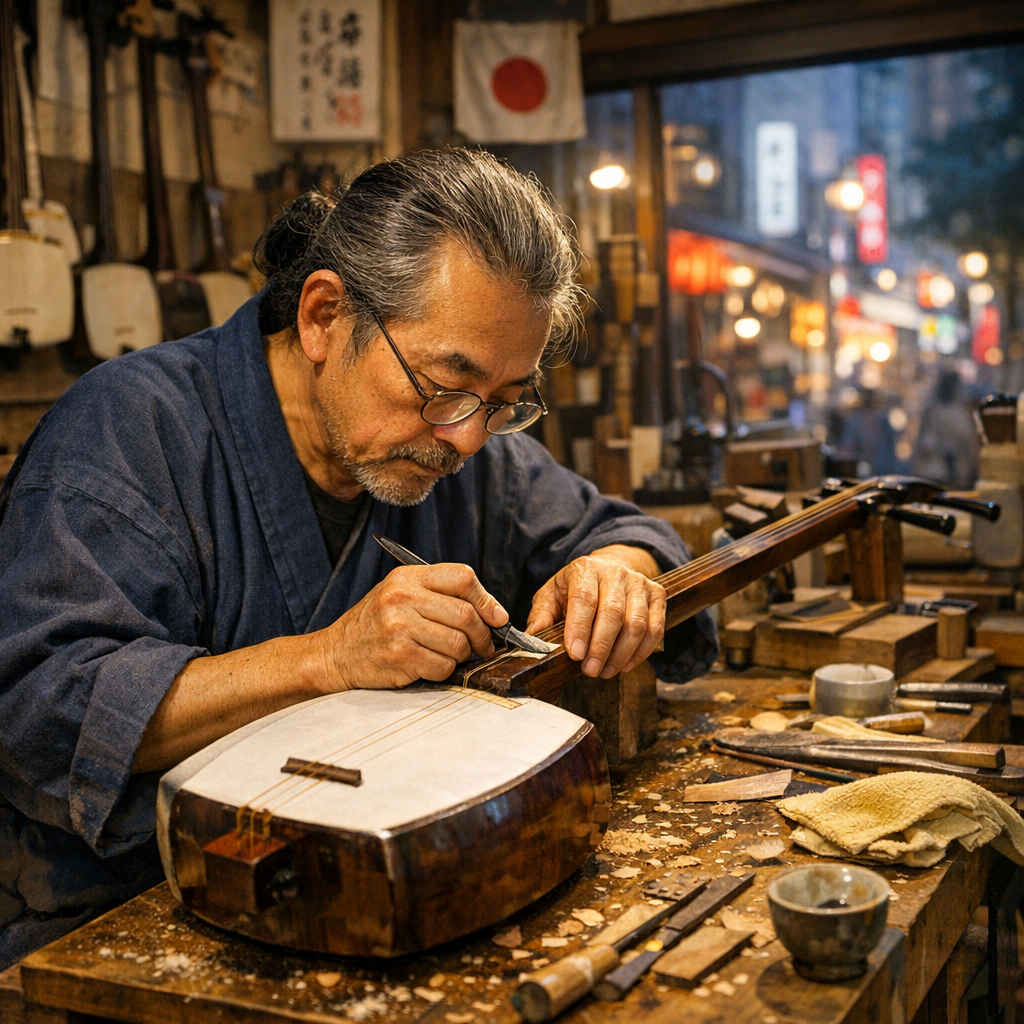
Tokyo’s vibrant cultural scene is deeply rooted in its traditional music, with instruments like the shamisen and koto playing pivotal roles. These instruments not only produce unique sounds but also embody centuries of craftsmanship and history.
The Shamisen: A Three-Stringed Legacy
The shamisen, a three-stringed instrument, has been integral to Japanese music for over 400 years. Originating from the Ryukyuan sanshin, it evolved into various types, including the hosozao (slim neck), chuzao (medium neck), and futozao (thick neck), each suited to different musical genres. In Tokyo, the shamisen is crafted with meticulous attention to detail, ensuring each instrument resonates with the player’s style and the desired tone. The neck’s construction is particularly crucial, as it influences the instrument’s sound quality. Traditionally, materials like redwood, oak, and rosewood are used for the neck, while the body is covered with cat or dog skin to enhance resonance. This dedication to craftsmanship ensures that each shamisen is unique, tailored to the musician’s needs. [Source: Tokyo Metropolitan Government]
The Koto: Japan’s Thirteen-Stringed Harp
The koto, a thirteen-stringed instrument, was introduced to Japan in the 8th century and has since become a staple in traditional music. Crafted primarily from paulownia wood, the koto’s design has been refined over centuries to produce its characteristic clear and resonant tones. In Tokyo, koto makers focus on the instrument’s length, thickness, and curvature to enhance sound quality. The process involves adjusting the kora (shell) part of the body, as its shape significantly affects the instrument’s resonance. The strings, traditionally made of silk, are plucked using plectra worn on the thumb, index, and middle fingers, allowing for a range of expressive sounds. [Source: Tokyo Metropolitan Government]
Experiencing Traditional Music in Tokyo
For those interested in experiencing these instruments firsthand, Tokyo offers several avenues:
Live Performances
Venues like ZAKURO provide authentic Japanese traditional music shows, featuring instruments such as the koto, shamisen, shakuhachi, and taiko drums. Located in Omotesando, ZAKURO hosts performances that immerse audiences in the rich tapestry of Japan’s musical heritage. [Source: ZAKURO Show]
Hands-On Learning
For a more interactive experience, consider taking lessons from seasoned musicians. Kouzan Oyama, a master of the shamisen, koto, and sanshin, offers lessons in Tokyo. With over 20 years of teaching experience, he provides insights into the techniques and history of these instruments. [Source: Time Out Tokyo]
Craftsmanship Demonstrations
To appreciate the artistry behind these instruments, the Tokyo Japanese Music Instruments & Commerce Union organizes events showcasing the craftsmanship involved in making koto and shamisen. These demonstrations offer a rare glimpse into the meticulous processes that bring these instruments to life. [Source: Tokyo Japanese Music Instruments & Commerce Union]
Tokyo’s dedication to preserving and celebrating its musical traditions ensures that both residents and visitors can engage deeply with instruments like the shamisen and koto, experiencing their timeless allure in various settings.