

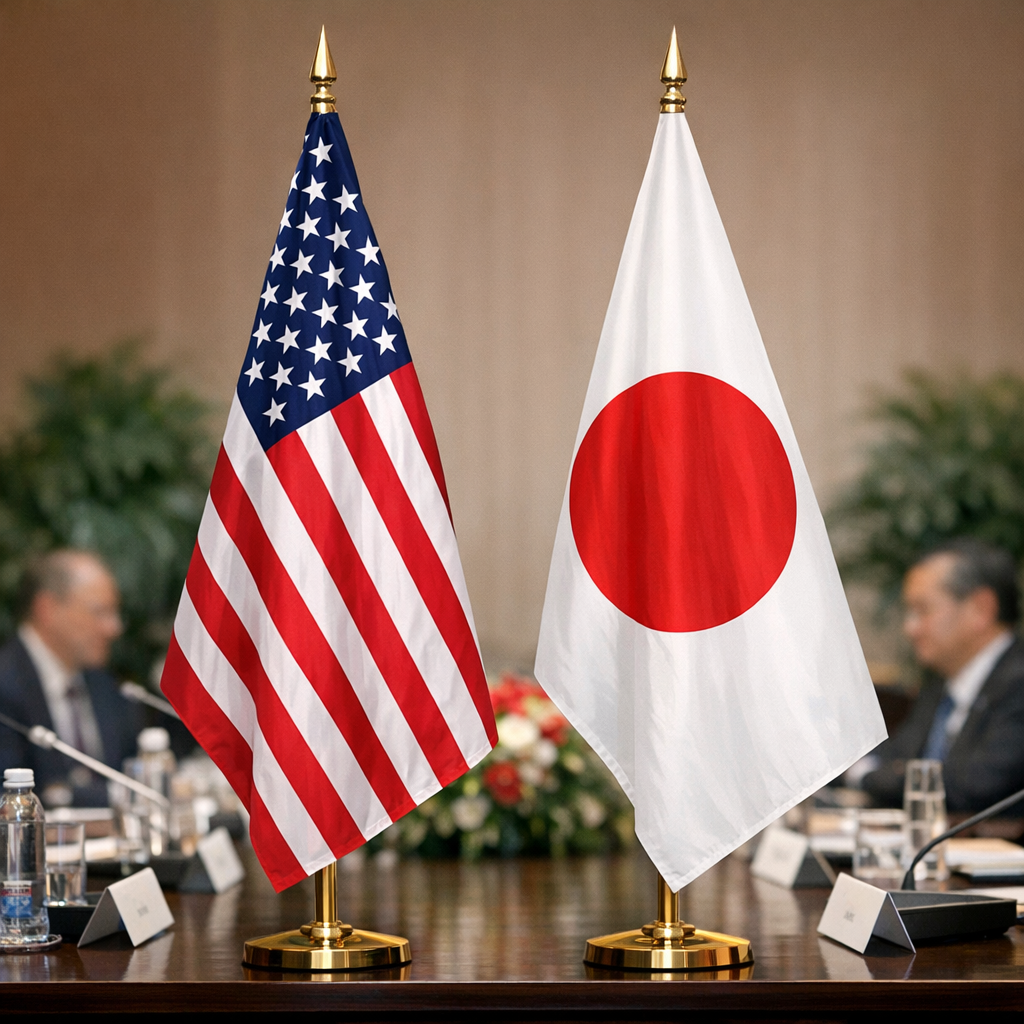
The relationship between the United States and Japan has long been a cornerstone of international diplomacy, characterized by deep economic ties and a robust security alliance. As global dynamics shift, understanding the current state and future prospects of this partnership is essential.
Economic Interdependence
Japan stands as the sixth-largest trading partner of the United States, with bilateral trade encompassing a wide array of goods and services. Japanese investments significantly contribute to the U.S. economy, with Japan being a top source of foreign direct investment. Conversely, American businesses have a substantial presence in Japan, underscoring the mutual economic benefits derived from this relationship.
Security Alliance
The U.S.-Japan security alliance, formalized through the mutual defense treaty, grants the United States the right to base military personnel and assets on Japanese territory in exchange for security guarantees. This arrangement has been pivotal in maintaining regional stability, particularly in addressing challenges posed by neighboring countries.
Trade Policies and Tariffs
Recent developments have seen the implementation of reciprocal tariffs between the two nations. In 2025, the U.S. announced tariffs on Japanese imports, leading to a 15% rate on nearly all Japanese goods entering the United States. While this agreement provided American producers with increased access to Japanese markets, it also introduced complexities for Japanese exporters, particularly in the automotive sector. The Japanese government acknowledged the impact of U.S. trade policies on its economy, noting that the effects were especially evident in the auto industry.
Future Prospects
Looking ahead, both nations are poised to navigate the evolving landscape of their bilateral relationship. Collaborative efforts in areas such as technology, energy, and environmental initiatives present opportunities for strengthening ties. Additionally, ongoing dialogues aim to address trade imbalances and ensure that the partnership remains mutually beneficial.
In conclusion, the U.S.-Japan relationship continues to be a dynamic and multifaceted partnership. By fostering open communication and cooperation, both nations can adapt to changing global circumstances and further solidify their alliance for the future.