

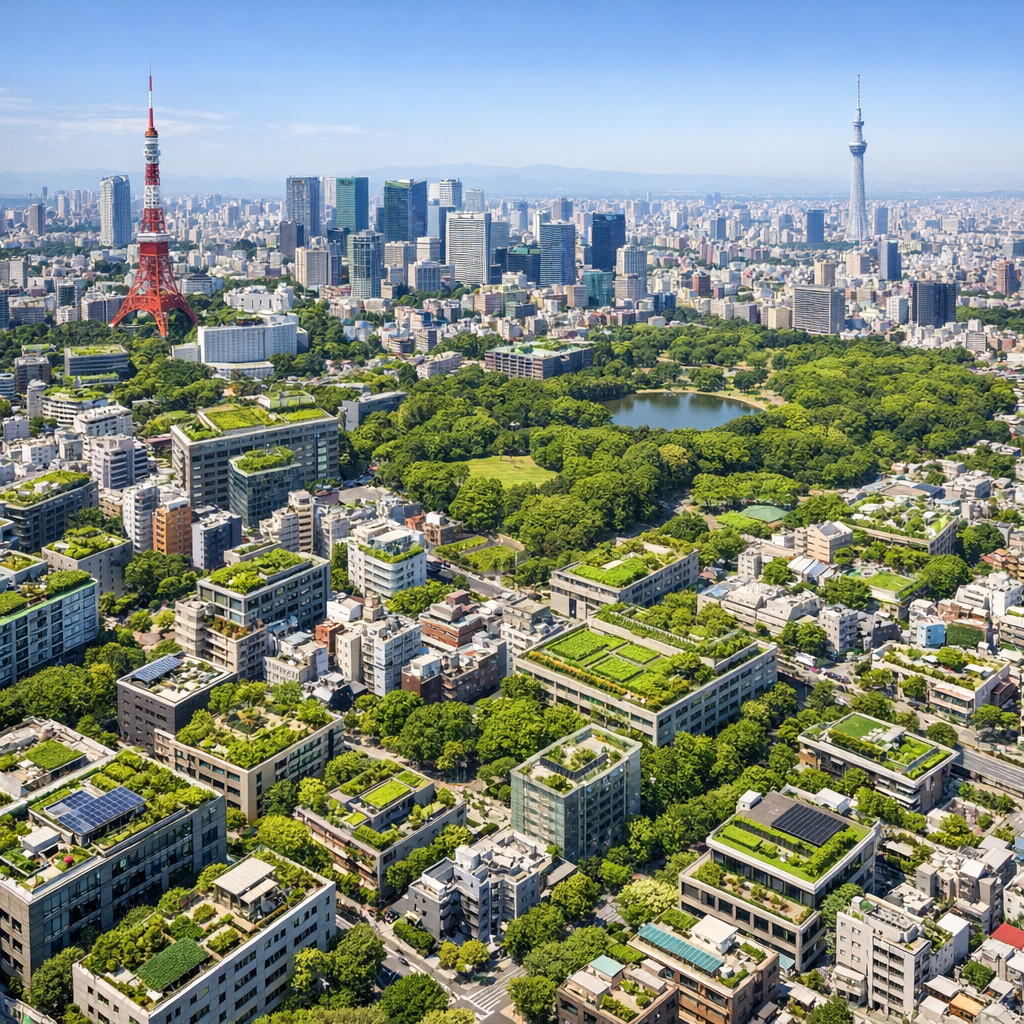
Tokyo, like many major cities worldwide, experiences the urban heat island (UHI) effect, where urban areas are significantly warmer than their rural surroundings. This phenomenon arises from factors such as the extensive use of heat-absorbing materials like concrete and asphalt, reduced vegetation, and waste heat from human activities.
Causes of the Urban Heat Island Effect
The primary contributors to the UHI effect in Tokyo include:
- Urban Design and Materials: The city’s dense infrastructure, characterized by dark surfaces such as roads and buildings, absorbs and retains heat, leading to higher temperatures compared to less developed areas.
- Reduced Vegetation: Urbanization often leads to a decrease in green spaces, diminishing the natural cooling effects provided by plants through shade and evapotranspiration.
- Anthropogenic Heat: Activities like transportation, industrial processes, and air conditioning release additional heat into the urban environment, further elevating temperatures.
Impacts on the Environment and Society
The UHI effect has several notable consequences:
- Increased Energy Consumption: Higher temperatures lead to greater use of air conditioning, resulting in elevated energy demand and associated greenhouse gas emissions.
- Health Risks: Elevated urban temperatures can exacerbate heat-related illnesses, particularly among vulnerable populations such as the elderly and those with pre-existing health conditions.
- Environmental Degradation: Warmer urban areas can negatively affect local ecosystems, including altering habitats and stressing urban flora and fauna.
Mitigation Strategies
To address the UHI effect, Tokyo has implemented and continues to explore various strategies:
- Urban Greening: Increasing vegetation through the development of parks, green roofs, and street trees can provide shade and promote cooling via evapotranspiration. Studies have shown that enhancing green spaces can effectively reduce urban temperatures and lower energy consumption for cooling.
- Cool Roofs and Pavements: Utilizing reflective materials for rooftops and pavements can decrease heat absorption, thereby reducing surface and ambient temperatures. Implementing cool roofs has been identified as an effective measure to mitigate the UHI effect.
- Urban Design Optimization: Designing buildings and urban layouts to facilitate natural ventilation can help dissipate heat. Creating ‘wind paths’ in densely built areas has been studied as a method to mitigate the UHI effect in Tokyo.
Community Involvement
Residents can also contribute to mitigating the UHI effect by:
- Planting trees and maintaining gardens to increase local greenery.
- Using energy-efficient appliances to reduce waste heat.
- Supporting policies and initiatives aimed at sustainable urban development.
By understanding the causes and impacts of the urban heat island effect, and implementing effective mitigation strategies, Tokyo can work towards creating a more comfortable and sustainable urban environment for all its residents.